top of page
Read our most recent posts on foot mechanics, the novabow system, and foot strengthening.    

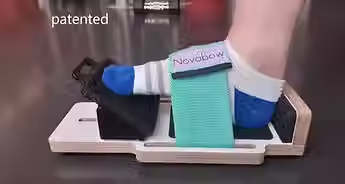
GB international and Olympic hammer thrower Chris Bennett is one athlete who has benefited from using the Novabow™ System, a revolutionary exercise device that allows easy foot strengthening and stretching.


At 6 feet 2 and a muscular nineteen stones, Chris is surely one of Scotland's most powerful athletes and, his feet are under tremendous strain during sprint training sessions.


"I had pain in both of my knees and my back" said Bennett ,"and I was told surgery might be required. However, after using the Novabow the pain in my knees, calves, and back went away. The pain returned when I stopped using the device for a while but then got better again once I restarted using the Novabow.

Now I use it twice a day and wish I had done it sooner. Amazing"


And the benefits of foot strengthening aren't just confined to elite athletes. Research has clearly demonstrated that foot strengthening can help improve balance, reduce pain from flat feet and even reduce knee pain.


The intrinsic foot muscles are relatively small and start and finish within the foot. However, despite their size these muscles are crucial to whole body mechanics and respond best to targeted exercises which involves moving the toes around the toe knuckle joint ( MTPJ) without curling them . The Novabow makes this exercise a piece of cake.


Check out our Website where the Novabow is available for purchase

Chris Bennett in action


Plantar fasciitis causes sharp heel pain that can make walking or standing uncomfortable. This common condition results from inflammation of the plantar fascia, a thick band of tissue connecting the heel bone to the toes. Many people seek relief through various treatments, but one of the simplest and most effective methods is foot stretching. Understanding how foot stretching helps plantar fasciitis can empower you to manage pain and improve foot function.


What Causes Plantar Fasciitis Pain?


Plantar fasciitis develops when the plantar fascia undergoes excessive strain or small tears, leading to inflammation. This strain often comes from:


  • Overuse or repetitive stress, especially in runners or people who stand long hours

  • Poor foot mechanics such as flat feet or high arches

  • Tight calf muscles or Achilles tendons

  • Wearing unsupportive footwear


The pain is usually worst with the first steps in the morning or after periods of rest. The plantar fascia tightens overnight, and sudden stretching when you stand causes discomfort.


How Foot Stretching Targets the Root of the Problem


Stretching the foot and surrounding muscles helps reduce tension in the plantar fascia. Here’s how:


  • Improves flexibility: Stretching loosens tight calf muscles and Achilles tendons, which reduces pull on the heel and plantar fascia.

  • Increases blood flow: Gentle stretching promotes circulation, which supports healing and reduces inflammation.

  • Reduces stiffness: Regular stretching prevents the plantar fascia from becoming rigid and painful.

  • Enhances foot mechanics: Stretching can improve foot alignment and function, lowering the risk of further injury.


By addressing tightness and improving mobility, foot stretching tackles the underlying causes of plantar fasciitis pain rather than just masking symptoms.


Effective Foot Stretching Exercises for Plantar Fasciitis


Incorporating targeted stretches into your daily routine can provide noticeable relief. Here are some of the most effective exercises:


1. Calf Stretch Against the Wall


  • Stand facing a wall with your hands on it at shoulder height.

  • Place one foot behind the other, keeping the back leg straight and heel on the ground.

  • Lean forward, bending the front knee until you feel a stretch in the calf of the back leg.

  • Hold for 20-30 seconds and switch legs.

  • Repeat 3 times per leg.


This stretch loosens the calf muscles, reducing tension on the Achilles tendon and plantar fascia.


2. Plantar Fascia Stretch with a Towel


  • Sit with your legs extended.

  • Loop a towel or belt around the ball of your foot.

  • Gently pull the towel toward you while keeping your knee straight.

  • Hold the stretch for 20-30 seconds.

  • Repeat 3 times on each foot.


This targets the plantar fascia directly, helping to ease tightness.


3. Toe Stretch and Flex


  • Sit comfortably and cross one leg over the other.

  • Use your fingers to gently pull your toes back toward your shin.

  • Hold for 15-20 seconds.

  • Then, curl your toes downward and hold for another 15-20 seconds.

  • Repeat 3 times per foot.


This exercise improves flexibility in the toes and the plantar fascia.


4. Rolling Stretch with a Ball


  • Sit down and place a small ball (like a tennis or golf ball) under your foot.

  • Roll the ball slowly under your arch, applying gentle pressure.

  • Continue for 1-2 minutes per foot.


This massage-like stretch helps loosen the plantar fascia and relieve pain.


How Often Should You Stretch?


Consistency is key to seeing benefits. Aim to perform these stretches:


  • At least twice daily, especially in the morning and before bed

  • Before and after physical activity to prevent flare-ups

  • Gradually increase duration and repetitions as comfort improves


Avoid overstretching or causing pain. Stretching should feel relieving, not painful.


Additional Tips to Support Plantar Fasciitis Recovery


Stretching works best when combined with other supportive measures:


  • Wear supportive shoes with good arch support and cushioning.

  • Use orthotic inserts if recommended by a healthcare professional.

  • Limit high-impact activities that worsen pain.

  • Apply ice to reduce inflammation after activity.

  • Maintain a healthy weight to reduce pressure on your feet.


Consult a podiatrist or physical therapist for personalized advice and to rule out other causes of heel pain.


Real-Life Example of Stretching Benefits


A runner with chronic plantar fasciitis found that daily calf and plantar fascia stretches reduced her morning heel pain within two weeks. She combined stretching with supportive shoes and avoided running on hard surfaces. Over time, she returned to her regular training without pain, highlighting how simple stretches can make a big difference.


Updated: Jun 4

A Review of the Novabow System :

14 Weeks of Targeted Foot Care After 14 weeks of consistent use—four sessions a week, 10 minutes per foot—the NovaBow System has proven to be an impressively crafted tool for foot health and rehabilitation. With simple and convenient instructions available via Youtube. Being able to have an easy to use instrument that can be conveniently used each evening, sticking to the routine felt effortless.


Pros • Build Quality: Truly faultless. Each component exudes precision and high craftsmanship. I have no issues with the straps or compartments in the 14 week period •


User Experience: Exceptionally easy to integrate into daily life with clear and easy to follow instructions that makes it suitable for all. The system is to be used in a seating position, I used it while having dinner or watching TV in the evening. •

Results: From a non-professional opinion, the impact this system would have on arch support and plantar facitis would be a remarkable impact. For me, any post-race stiffness and plantar niggles vanished (although they were minimal to begin with) but this does suggest a larger impact on chronic sufferers. Although I began with high strong arches, I noticed improved foot stability during high tempo runs. Whether mental or biomechanical, even subtle gains matter—especially for runners.


Cons • Progress Tracking: There's no visual or measurable feedback mechanism for the system in my personal use. This may be different for people with chronic problems which I discuss in the looking ahead section. For users without pain or arch collapse, it’s challenging to gauge effectiveness quantitatively, which could deter long-term commitment in the product. I would likely invest an introduction to the package for the user to be able to perform a test or basic exercise that they can monitor •


Limitations with Achilles Tendonitis: Despite hopes for myself, the Novabow didn’t affect my chronic Achilles tendonitis. I wouldn’t recommend it as a solution for this specific issue but that doesn’t deter from the gains on foot support, stability and strength discussed above.


Overall Impression Novabow is a top-tier, highly crafted system for targeted foot care, especially valuable for plantar fasciitis sufferers and those with flat feet or collapsed arches. While it may not cover every need—like Achilles recovery—it delivers focused, high-quality benefits invaluable to everyday life to high impact sporting activities.

Kind regards, Greg Longmire


Reply from Jomarg Innovation Ltd . Thank you for the review Grieg . Your point about monitoring progress is well made and we are working on an add on for this aspect just now .

Form Submission


bottom of page